
The Philadelphia Shaker Community:
An Outpost of Motherly Love
– April 2024 –

The Philadelphia Shaker Society is often overlooked within the overall arc of Shaker history. Perhaps this is because the Philadelphia settlement was a short-lived experiment that lasted only 50 years, operating as an offsite “out family” of the Watervliet community from 1858 to 1908. Or, maybe it is because records of the Philadelphia outpost are scant. Few written accounts survive—what we do know comes from letters retained by other branches of the Society, and the Philadelphia Shakers were not furniture makers or craftspeople, so material culture is not a tangible tether to the lives and experiences of Philadelphia’s extraordinary Believers.
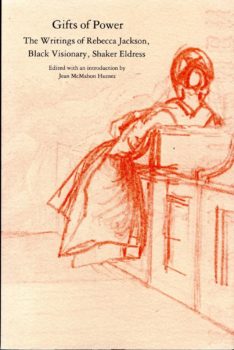
As a predominantly Black, working-class, urban utopia founded by the visionary, female spiritual leader Mother Rebecca Cox Jackson (1795-1871), the significance of the Philadelphia Shaker community cannot be understated. The Philadelphia Believers actualized the formative ideals of racial and gender equity, integrating Shakerism into everyday life in a profoundly meaningful way that any other branch of the Society could not replicate.
Rebecca Cox Jackson (1795-1871) was born in Philadelphia to a free family of African American descent. Tragedy pervaded her early years. From infancy, Rebecca was raised by her grandmother until, at age two or three, she was transferred to the care of her mother, Jane Wisson (or Wilson), and her stepfather, a sailor. Nothing is known of her biological father, who was most likely deceased. When Rebecca was six, her stepfather died at sea. The following year, her much-beloved grandmother also died and, by the time she was ten, Rebecca was living in a Philadelphia apartment with her mother, younger sister, and infant brother—the presumed offspring from a third marriage. The death of her mother followed just a few years later when Rebecca was 13.
From her mother’s death in 1808 until the opening of her autobiography in 1830, very little is known of Rebecca’s life. At some point, she was taken in by her brother Joseph Cox (1778-1843), who was considerably older and figured prominently in Rebecca’s life and writings. Joseph was a pillar of the powerful Bethel African Methodist Episcopal (A.M.E.) Church of Philadelphia, serving as a preacher and elder in addition to a variety of church-related offices. Rebecca continued living in her brother’s household after marrying Samuel S. Jackson, (they had no children). She worked as a seamstress and, seemingly, lived a life of relative prosperity and safety.
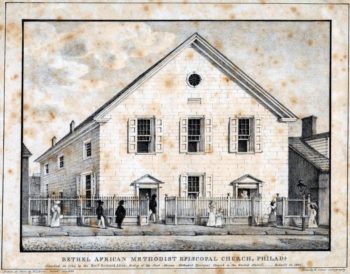
Rebecca’s earliest writings illustrate a fear of sudden, irrational physical violence, which may have stemmed from her traumatic personal history as well as the growing racial tension and violence inflicted on Black Philadelphians by white mobs in the 1830s and 40s. Black-owned homes were destroyed and her brother’s Bethel A.M.E. Church was damaged.
It was in july July 1930, at age 35, that Rebecca experienced a spiritual conversion. The event happened during a severe thunderstorm which, coincidently, was one of her deep-set fears. “In time of thunder and lightning I would have to go to bed because it made me so sick,” she wrote in her journals, (pictured right, in the collection of the Berkshire Athenaeum, Pittsfield, MA). During the storm, Rebecca heard an inner voice assuring her that she was going to die and go to hell. Very quickly, she was struck by the divine realization that “the messenger of death, was now the messenger of peace, joy and consolidation.” She began praying for the merciful forgiveness of her sins and, at the time of conversion, which she likened to a cloudburst, she felt a flood of love for God and humankind and her phobia vanished.
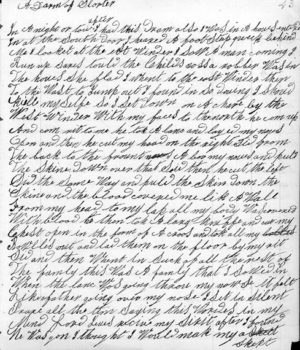
Soon thereafter, Rebecca began having visions of a divine inner voice that instructed her to heal the sick, convert the sinful, and converse with angels. It became a voice of instruction and protection, and she refused to go anywhere or do anything without the explicit guidance of the voice. Her early writings describe Rebecca’s efforts to learn to hear clearly and obey absolutely. In many ways, her visionary experiences were an exercise in practice and control, facilitated by an ascetic regimen of fasting, weeping, praying, and sleep deprivation that kept “her spirit eye clear.”
Following a revelation about lust, sin, and the fall of man, Rebecca began practicing celibacy. She persuaded her husband that her body was no longer hers or, more pointedly, his; rather, it was an instrument of the divine spirit that inhabited her. Eventually, her ascetic lifestyle became problematic to her household. “My dreams became a burden to my family,” she wrote. “I had started to go to the promised land, and I wanted husband, brother and all the world to go with me, but my mind was made up to stop for none.” She established herself as a leading member of a “Covenant Meeting” comprised of A.M.E congregants believing in Perfectionism before starting her own weekly meeting co-led by her spiritual sister Mary Peterson, wife of A.M.E preacher Daniel Peterson. These meetings began to attract large crowds, setting off a revivalist fervor within the small towns and villages west and south of Philadelphia.
In 1836, Rebecca separated from her husband and left Philadelphia, setting out on the road as an itinerant preacher with her Perfectionist group, The Little Band. When proselytizing in Albany, she observed a Shaker meeting in Watervliet. In her journal, Rebecca recalled:
“When they came in, the power of God came upon me like the waves of the sea… For the first time I saw a people sitting and looking like people that had come into a place prepared for the solemn worship of the true and living God, who is a spirit and who will be worshiped in spirit and in truth. This people looked as though they were not of this world, but as if they were living to live forever.”
Following her initial introduction to Shakerism, Rebecca returned to the road to continue her work as an itinerant preacher. In her journals, she seems to struggle with conflicting desires for her own autonomy and the support of a spiritual community. For two winters from 1841 to 1843, she and The Little Band resided in Albany in the communal Perfectionist home of the Ostrander family. After two visits to the Shaker community in 1843, many members of Rebecca’s group joined the Shakers and, after a vision-fueled three-day visit, she expressed a total commitment to the faith.
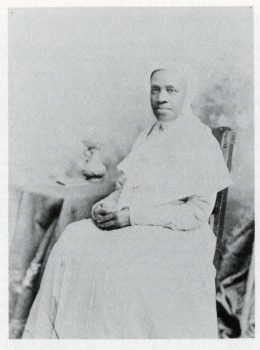
The general holy appearance of the Shakers appealed to Rebecca—she praised their comportment, uniformity, plainness, cleanliness, and otherworldly spirituality. She wrote that they struck her as the living embodiment of Christian perfection, and the values and beliefs of Shakerism were uncannily similar to her own. Although she did not explicitly address the Shaker practice of racial equality in her journals, it’s plausible that the community’s inclusion of Black Believers and commitment to abolitionism was further enticement to join.
Despite her conversion to Shakerism, Rebecca returned to Philadelphia, and it wasn’t until 1847 that she officially took up residence in Watervliet with her disciple, Rebecca Perot (1833-1913). The two Rebeccas were permitted to stay together, residing in the same retiring room as members of the South Family for approximately four years. The records from this time are scarce; however, there is documentation of Rebecca Cox Jackson’s work as a seamstress, (perhaps drawing on her previous experience), with regular stints in the kitchen as an assistant cook, or “kitchen sister.”
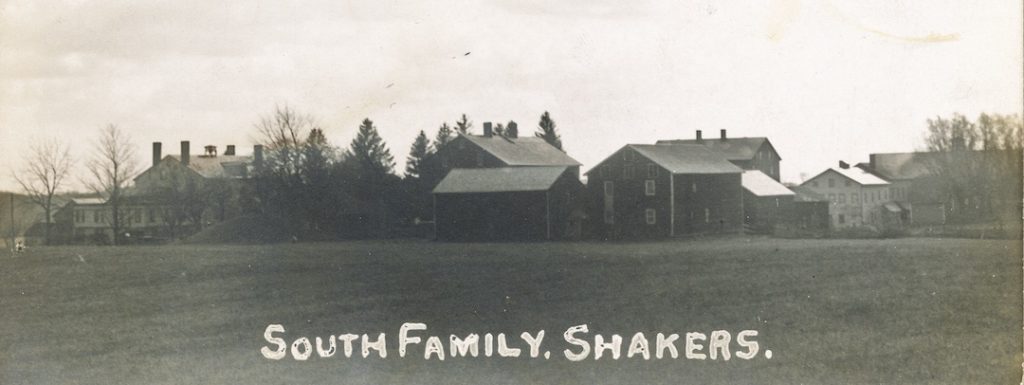
Although rank-and-file members did not generally preach at Meetings, Shaker leadership recognized Rebecca’s abilities and permitted her to preach at Sabbath Meetings open to the public. A Shaker record from September 10, 1848, notes, “Sister Rebecca Jackson rose up and spoke beautiful of the way of God.”
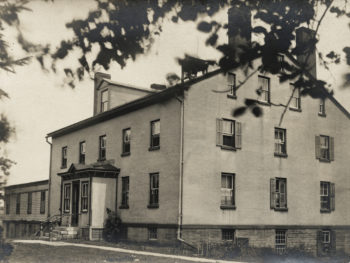
From her earliest days in Watervliet, Rebecca expressed concern about her alienation from the world. She reflected, “I wondered how the world was to be saved, if Shakers were the only people of God on the earth, and they seemed busy in their own concerns, which were mostly temporal.” Soon thereafter, her concern was acutely pointed toward the “spiritual and temporal bondage” of Black America—enslaved and free. From October through December of 1850, the two Rebeccas were sent to Philadelphia on a missionary tour, presumably to convert young, Black Believers to join the faith. Upon returning to Watervliet, Rebecca Cox Jackson proclaimed that she had received a calling to establish a permanent Shaker mission in her hometown.
Eldress Paulina Bates (1806-1884) refused to authorize Rebecca’s plan. In the Eldress’s view, a Philadelphia settlement would create too much exposure to the false values and corruptions of the world. Shaker communities were designed to be socially isolated and economically self-sufficient—only limited, sanctioned business relationships were permitted between Shakers and non-believers. In Rebecca’s view, the Eldress was standing in the way of a divine project. She described this disagreement as a conflict between her “inward” (divine) lead and her “outward” (Shaker) lead.
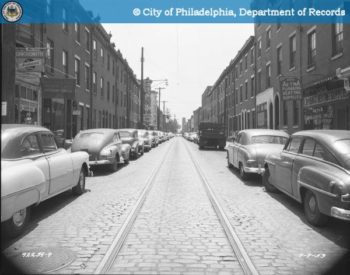
Eventually, the two Rebeccas left Watervliet for Philadelphia in July 1851. Shaker leadership recorded that Rebecca “abandoned her home in Zion” to set out on a mission to convert the nation, “perhaps consciously, but I should say, rather delusively,” wrote Elder David A. Buckingham (1803-1885). In 1854, Rebecca reflected on her departure from Watervliet and subsequent estrangement from her fellow Believers, writing about her continued bewilderment over the Elders’ failure to approve her mission and, so doing, connect with potential Black converts. During this six-year stint in Philly, the Rebeccas became interested in spiritualism, participating in seances and training as mediums. Ultimately, Rebecca Jackson could not shake her connection to Shakerism. She saw herself as the only Believer capable of practicing the Shaker gospel in a truly nonracist manner in which Black Shakers and white Shakers could share a communal life, and she and Rebecca Perot returned to Watervliet for one final year of residence among their Brethren and Sisters.
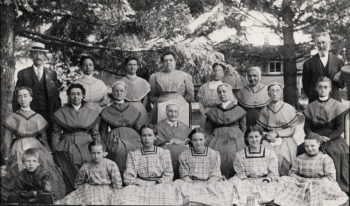
In October of 1858, the Rebeccas left Watervliet with a blessing from Eldress Paulina Bates and the moral, legal, and financial backing of all nineteen Shaker settlements to start a new branch of the Society in Philadelphia. The following year, on the eve of the Civil War, the Philadelphia Shaker community was gathered, and Rebecca Cox Jackson became Mother Rebecca. The Philadelphia Shakers did not exceed twenty members with membership comprised of mostly Black women who worked as domestics, laundresses, or seamstresses. Documentation of the community’s members, activities, and even their whereabouts is scarce, but there is evidence tying them to the addresses 724 Erie Street in North Philadelphia and 522 South 10th Street in Washington Square, (the location of an ACME Market today).

Sadly, Mother Rebecca recorded very few journal entries after 1858; her final entry is dated June 4, 1864. Even so, evidence suggests that the two Rebeccas continued to preach and practice Shakerism in Philadelphia, gaining enough of a presence within the established religious landscape to warrant mention in W.E.B. Du Bois’s 1899 publication, The Philadelphia Negro: A Social Study, in which Du Bois documented two Shaker families in Philadelphia’s historically Black seventh ward.
Throughout the 1870s and 1880s, members of the Mount Lebanon and Watervliet ministries would visit the Philadelphia community for weeks at a time, and accounts of these visits confirm that the Philadelphia society remained in union with the Shaker ministry. In 1872, a group from Watervliet described the Philadelphia townhouse as “almost palatial” with fully modernized amenities like plumbing and central heat. They recorded, “a large drawing room, sufficient for twenty souls to sit down,” and a carpeted meeting room with “marble mantles… very nice, almost extravagantly so.” Recounting a worship service, the visitor described the religious exercises as “beautiful and zealous… When they attempt to shake, they get right down, almost to the floor, and bow, bend, and strip off pride and bondage.” In 1873, Elder Henry Clay Blinn (1824-1905) of the Canterbury ministry agreed, noting the Philadelphia Believers seemed “to understand the object of their calling & were resolutely determined to abide faithful.”
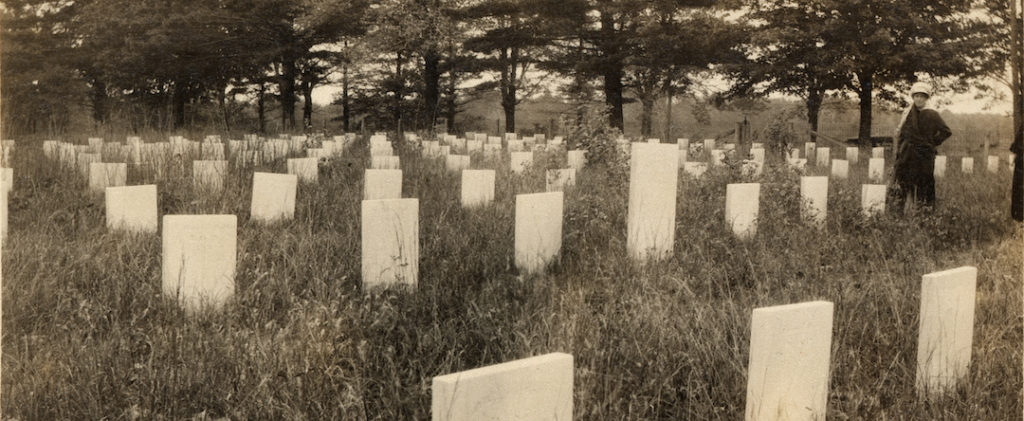
Mother Rebecca Cox Jackson died at age 76 on May 24, 1871, and she was buried in the Shaker cemetery in New Lebanon, New York. Later, her body was moved to Eden Cemetery, a historically Black cemetery near Philadelphia. Following the loss of her spiritual Mother, companion, and Elder, Rebecca Perot assumed leadership of the sect as well as the name “Mother Rebecca Jackson” and, thus, the two Rebeccas became one. The second Mother Rebecca continued to lead the Philadelphia Shakers for over 25 years until, in the 1890s, membership began to decline. In 1896, four of the remaining Philadelphia Sisters—including the self-anointed Mother Rebecca Jackson (nee Perot)—moved to Watervliet; however, it is uncertain if the Philadelphia society was closed at that time. Upon Mother Rebecca (Perot’s) return to Watervliet, Brother Alonzo Hollister (1830-1911) recorded, “I believe this ends Mother Jackson’s colony in Philadelphia.” Immediately following this first note is an amendment: “I have learned since, there is still a colony of Believers there, and zealous too. 1908.”
At this point, the fate of the Philadelphia community remains unknown. Mother Rebecca (Perot) died in 1901 at age 82. She is buried in the Shaker Cemetery in Watervliet.