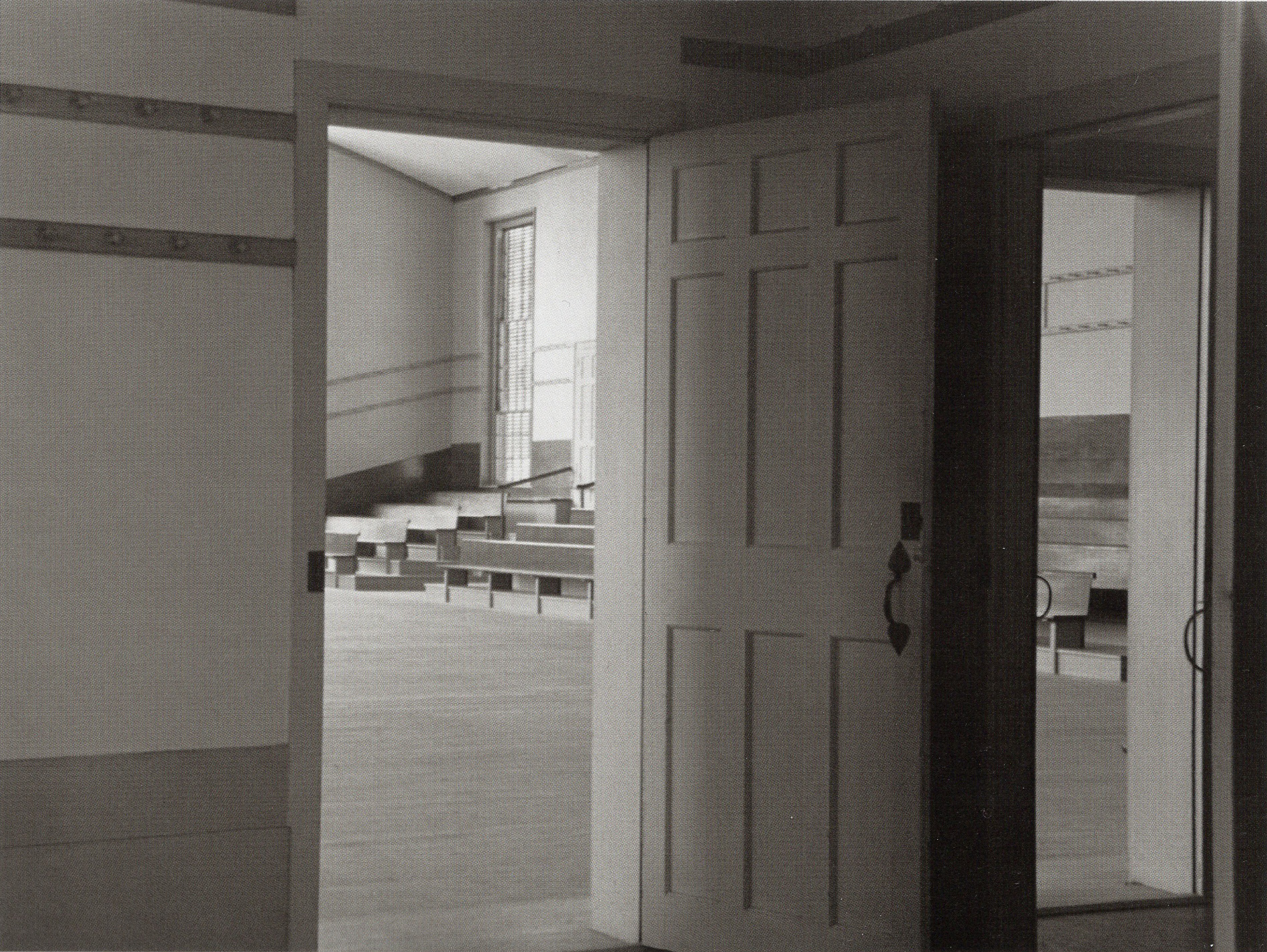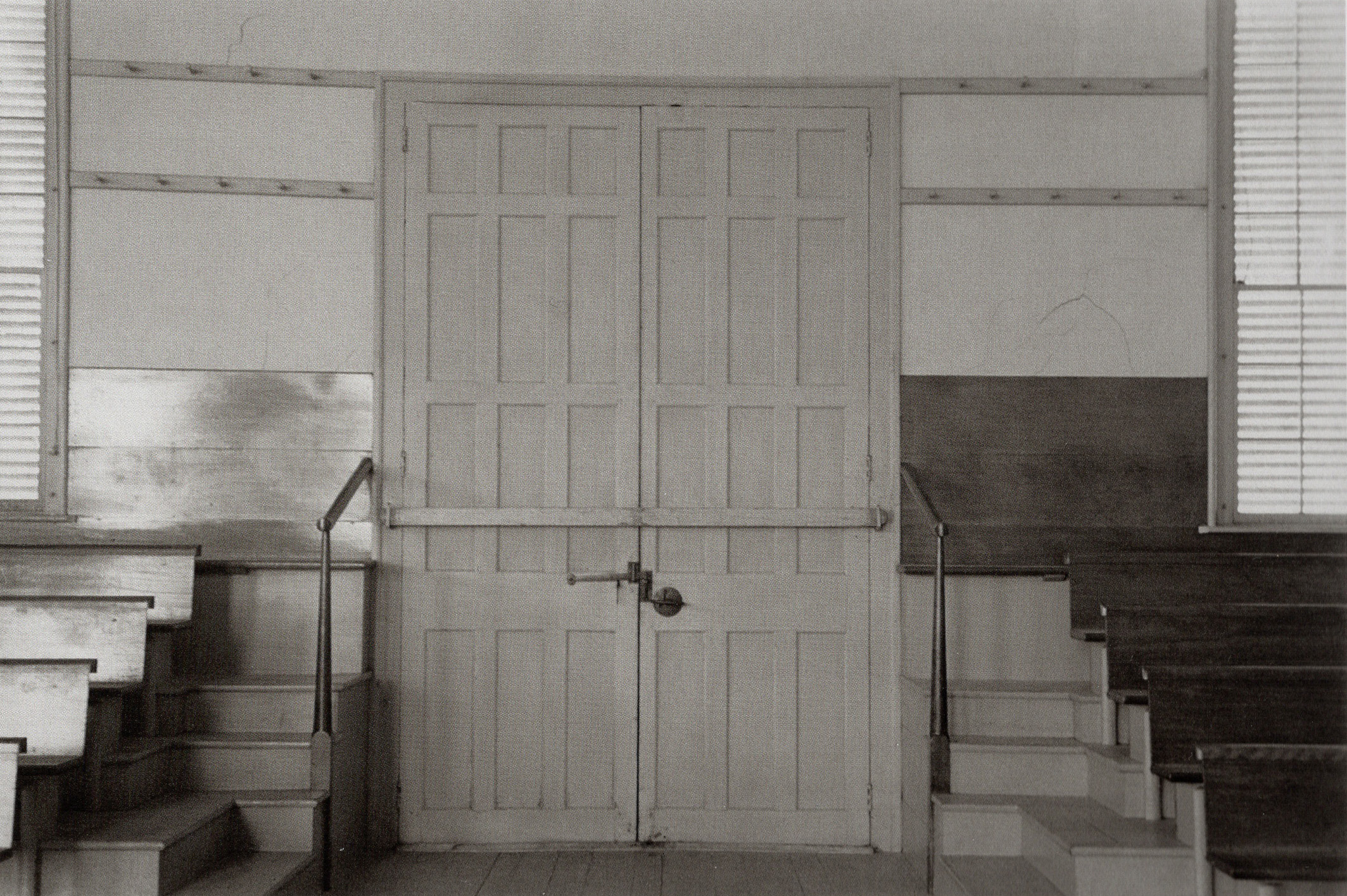

Shaker Hollow photographed in 1984, Westchester County Historical Society
On Spring Street in South Salem — just a stone’s throw from John Keith Russell Antiques — sits an eighteenth-century farmhouse named “Shaker Hollow.” The classic, two-story Colonial with a gable roof, central chimney, and clapboard exterior was built in 1795 by James Conklin (1749-1806), a prosperous farmer, landowner, and distiller of rum and cider brandy. Generations of Conklins lived on Spring Street until, in 1928, the farmhouse was sold to Juliana Force (1876-1948), an aptly named powerhouse of the New York art world. It was Force who named the Conklin home “Shaker Hollow” in honor of her collection of Shaker furniture, which was displayed in the south wing of the house. (According to local lore, the addition was built for that purpose.)
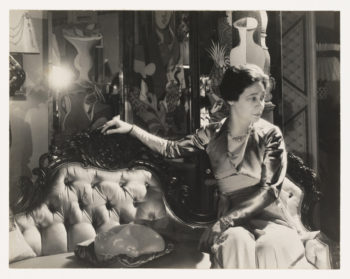
Portrait of Juliana Force, Cecil Beaton, c. 1931, Whitney Museum
Force was originally from Bucks County, Pennsylvania. In 1907, she was hired to assist with the affairs of Gertrude Vanderbilt Whitney (1875-1942), a New York-based heiress, sculptor, and patron of the arts. In 1918, Whitney founded the Whitney Studio Club in Greenwich Village and, under Force’s direction, the Club became an important forum for artists to connect and explore emerging themes in contemporary art.

Gertrude Vanderbilt Whitney, n.d., Whitney Museum of American Art
Operating as a membership-based organization, the Club offered many amenities, including an exhibition space, squash court, library lined with art books, salon with blue satin curtains, and billiards room. Force maintained an apartment above the Club that, like her primary residence in Bucks County, she decorated with outdated Victorian furniture, Americana, and modernist art — an eclectic amalgamation that became her signature and much-celebrated style.
Force’s close friend and neighbor in the Whitney Studio Club building was artist Charles Sheeler (1883-1965) who, incidentally, shared her affinity for American antiques. To his biographer, Constance Rourke, Sheeler articulated:
“I don’t like these things because they are old but in spite of it. I’d like them still better if they were made yesterday because then they would afford proof that the same kind of creative power is continuing.”
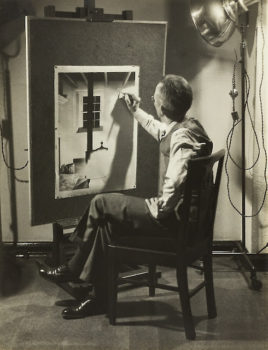
Self Portrait at Easel, 1931-32, Art Institute of Chicago
In February 1924, artist Henry Ernest Schnakenberg (1892-1970) organized Early American Art, an exhibition at the Whitney of contemporary American Modernism alongside early American folk art — both Sheeler and Force lent pieces of Americana to the show. The New York Times called the exhibition “funny and quaint,” remarking on the engaging connections between art and antiques. For example, Sheeler’s painting, Portrait of a Woman (1924), was shown in dialogue with a chalkware cat.
Radically imaginative for the time, Early American Art illustrates the desire to forge a new trajectory of American art, connecting the work of contemporary artists to early American traditions — a legacy that would stand in contrast to Europe. Force, as a proponent of Modernism and Americana, became a figurehead of this new movement. Robert Bishop, former director of the American Folk Art Museum, wrote that Force, “did not view folk art as a minor expression of American art, but an extension of craft traditions in the realm of fine art.” Force’s biographer Avis Berman concurs, writing that Early American Art was a “manifestation of the indigenous American culture that [Juliana] and Gertrude were working so assiduously to legitimize… The folk artists offered a historic alternative to academic training; the Whitney galleries, where young and emerging artists could exhibit, provided a contemporary alternative to the Academy.”


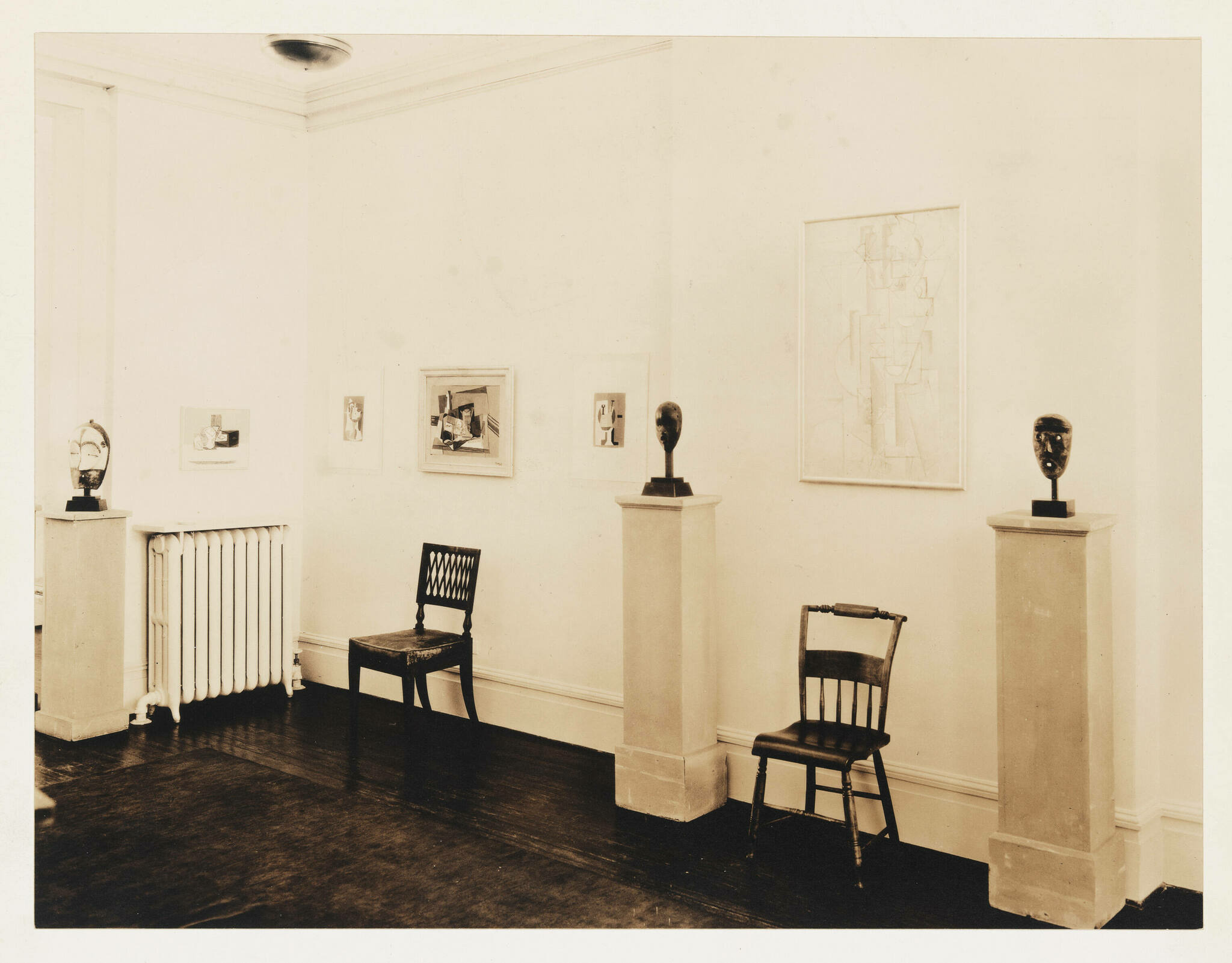
Charles Sheeler, Whitney Studio Club interiors, c. 1925-1926, Whitney Museum of American Art
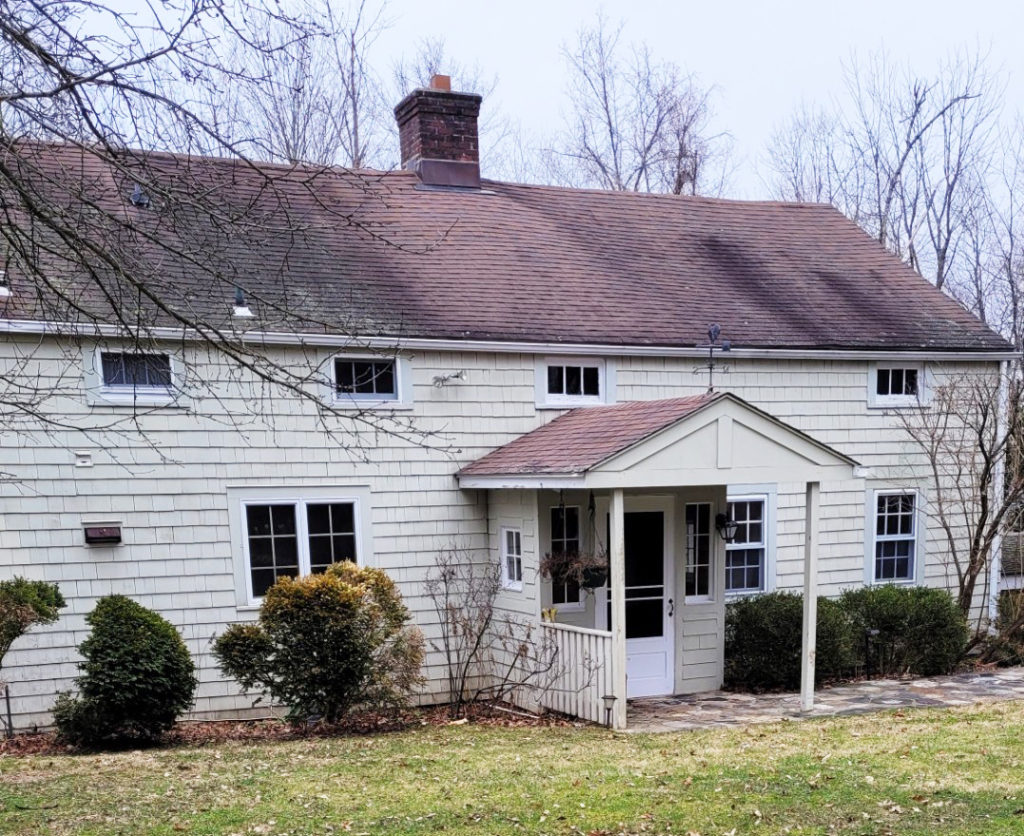
The Sheelers’ South Salem “cottage” in 2024
Around this time, Sheeler began acquiring Shaker objects, buying materials directly from the Shaker communities in New Lebanon and Hancock, and working with a trusted dealer. By 1926, he had cultivated an important collection, which furnished a cottage that he and his wife Katherine rented in South Salem — “a charming stucco studio, where the antiques of Pennsylvania Dutch and Shakers… mingle in agreeing medley with modernist furniture,” described by poet William Carlos Williams (1883-1963). Selections of the Sheelers’ Shaker furniture and collectables were documented in a series of photographs that Sheeler shot in 1929. Today, these photos of South Salem are important artifacts that not only illustrate how Sheeler lived with Shaker, but further, provide some insight into his creative process.
Though best known for his precisionist painting, Sheeler launched his career as a commercial photographer and, ultimately, the camera became his primary research method for his painting practice.
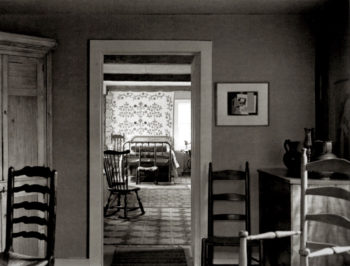
Charles Sheeler, South Salem interior, 1929
“Photography is nature seen from the eyes outward, painting from the eyes inward,” Sheeler wrote in his unpublished autobiography (1937). “Photography records inalterably the single image while painting records a plurality of images willfully directed by the artist. I have never seen in any painting the fleeting glimpse into a person’s character that I have seen depicted in some photographs, nor have I seen in any photograph the full rounded summation of the character of an individual that a Rembrandt or Greco portrays.”
The 1929 South Salem photographs subsequently became the artist’s “American Interiors” series of paintings, comprised of four related works: Interior (1926), Home, Sweet Home (1931), Americana (1931), and American Interior (1934). Each artwork features objects from Sheeler’s Shaker collection prominently within the composition; for example, the long Shaker table and bench with arch cutout feet (appearing in Home, Sweet Home, Americana, and American Interior), the two Shaker workstands — one with a tray top (in American Interior and Interior), and the unmissable oval pantry box (in American Interior and Americana). Looking at the photographs, it seems that Sheeler was interested in the visual confusion of three-dimensional objects flattened by the camera’s lens. The paintings, in turn, explored the affect of that confusion.
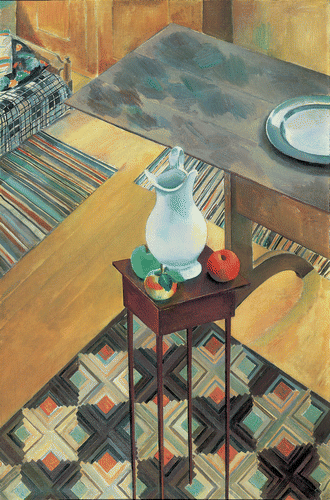


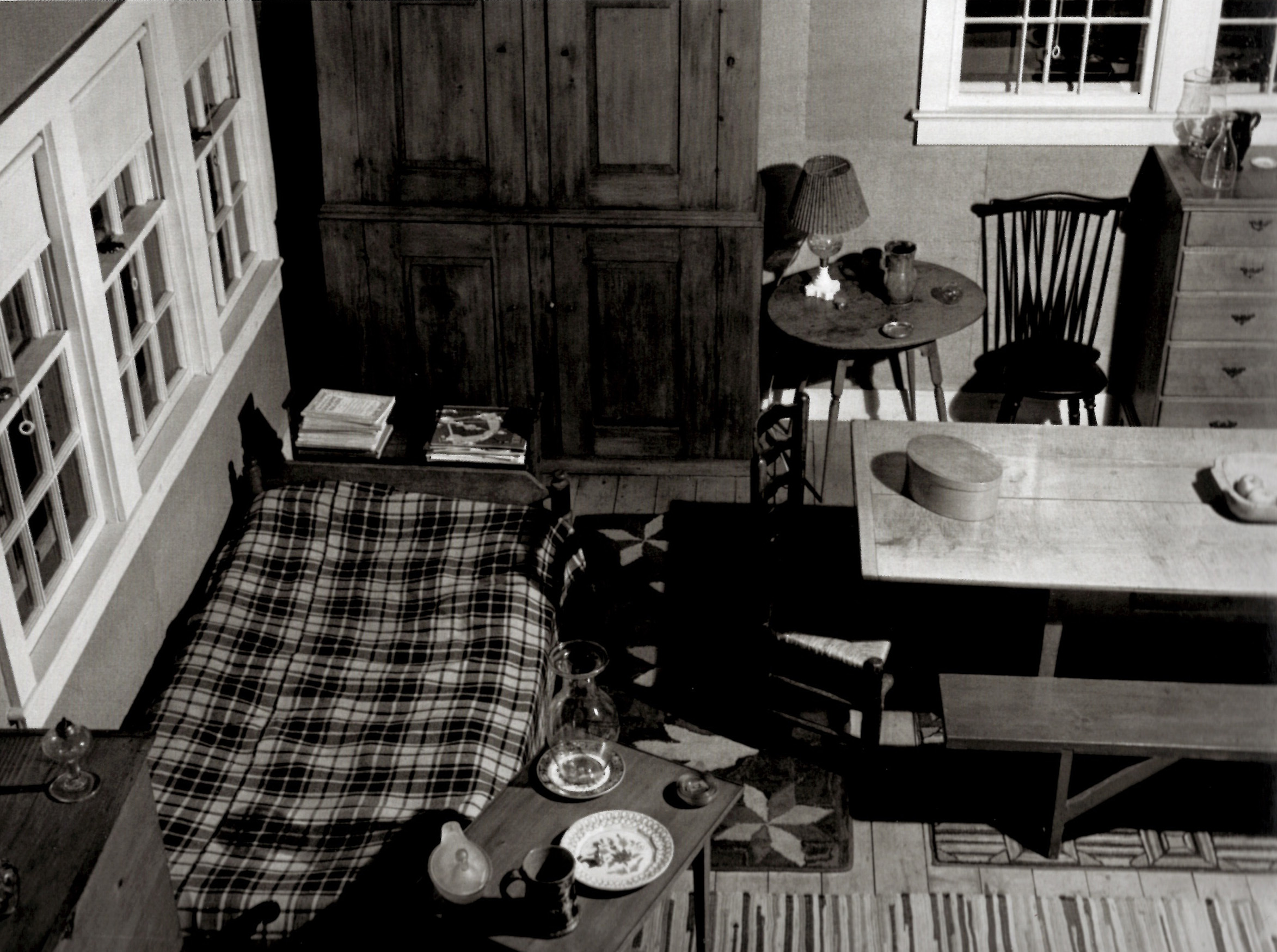
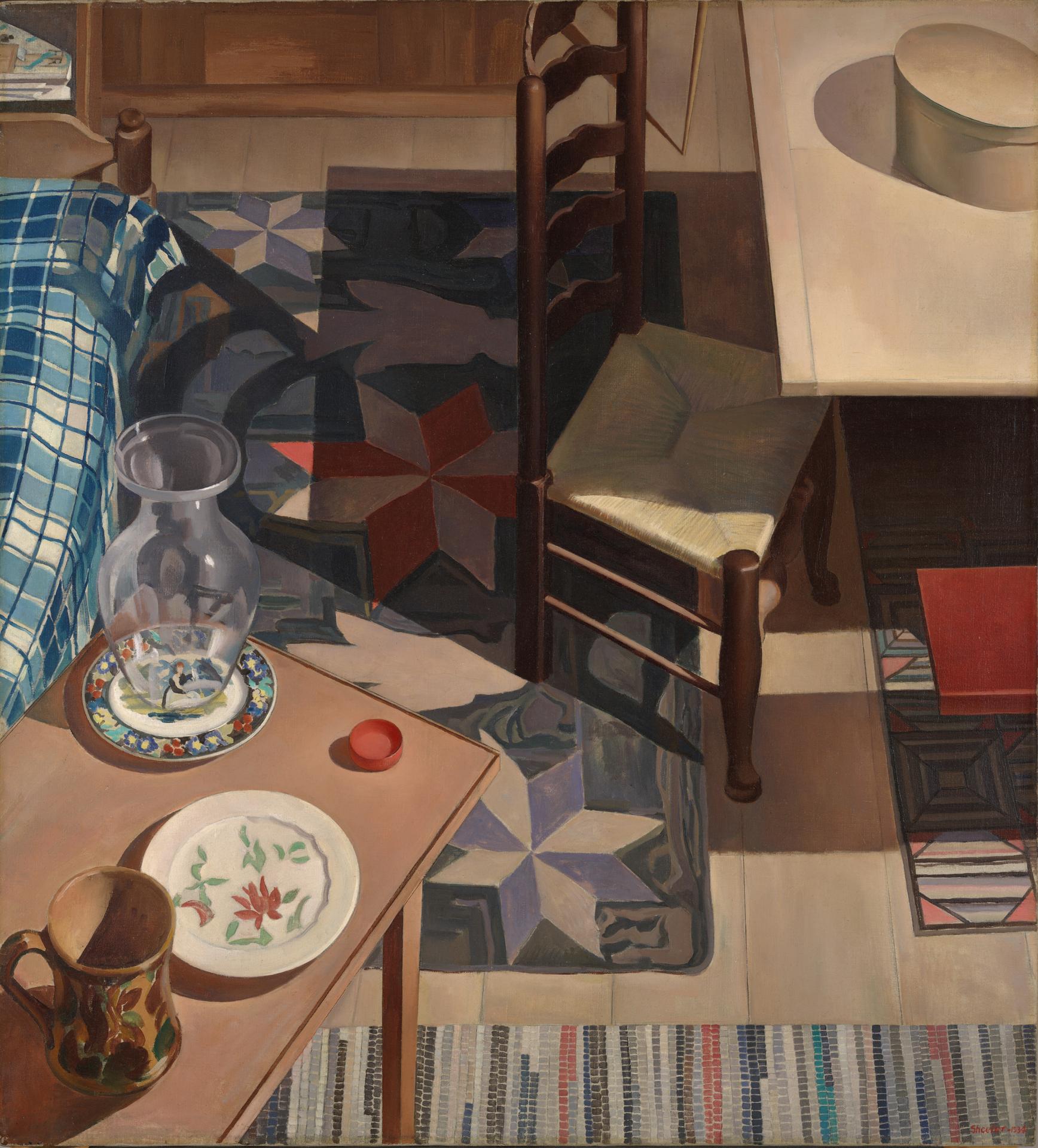
Left: Charles Sheeler, South Salem interior, 1929; Right: Charles Sheeler, American Interior (1934, Yale University Art Gallery)
Some art historians have questioned if Sheeler’s depiction of antiques is an interrogation of the culture of collecting that was popularized during the interwar years. The 1920s and 1930s witnessed an upsurge in the American folk art market, as well as the “colonial revival” in architecture and design, and the opening of period rooms in major national museums. Consuming, reviving, and exhibiting artifacts was a more visible phenomenon. This elevation of humble objects to contemporary masterpieces cultivated a patina of preciousness around the material culture of the past — a tactic to re-present history and, so doing, reframe the present.

Charles Sheeler, South Salem Interior, 1929
The paintings of the American Interiors can be encountered like period rooms — exhibits that celebrate beautiful objects while also nodding, ironically, to their commodification and contrivance. Too, they have a memorial-like quality — a reverence that honors the objects’ significance in Sheeler’s life as well as their history more broadly.
Berman opines, (via art critic Forbes Watson), that it was Sheeler’s appreciation of Shaker design that encouraged Force to acquire a collection of her own. The spare, utilitarian aesthetic appealed to her—she reverently separated Shaker artisans from folk painters, always citing the “elegance” of Shaker design and craftsmanship. In 1928, just two years after the Sheelers moved upstate, Force purchased the nearby Conklin farmhouse, naming it “Shaker Hollow” in honor of her burgeoning interest and enduring friendship. Force and Sheeler were neighbors once again, this time sharing a street in a small Westchester hamlet as opposed to a hallway in Greenwich Village.
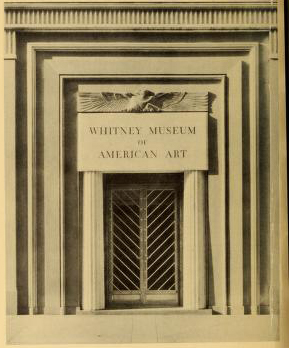
Whitney Museum, c. 1937
Unlike the Sheelers, Force was only in South Salem part-time as her work kept her engaged in New York. In 1929, Gertrude Vanderbilt Whitney offered her collection of more than 600 works of American art to the Metropolitan Museum of Art (MMA) with a promised gift of five million dollars to build and endow a new wing to exhibit it. The MMA declined her offer, so she decided to establish her own museum with Force at the helm as the founding director. The Whitney Museum of American Art opened on November 18, 1931, in a rowhouse on West Eighth Street near Fifth Avenue. Force later reflected, “It was decided that what was most needed was an organization unhampered by official restrictions but with the prestige which a museum invariably carries—an organization which would exhibit and purchase under the most auspicious circumstances native works of art.”
In its formative decades as an institution, the Museum presented works from the margins of art history — stories that had been ignored, buried, or forgotten — as a way to link contemporary art to a uniquely American past. Shaker, as an unrecognized bastion of American individualism and creative culture, fit perfectly within this objective. According to Sheeler:
“The Shaker communities, in the period of their greatest creativity, have given us abundant evidence of their profound understanding of utilitarian design in their architecture and crafts…It is interesting to note in some of their cabinet work the anticipation, by a hundred years or more, of the tendencies of some of our contemporary designers toward economy and what we call the functional in design.”
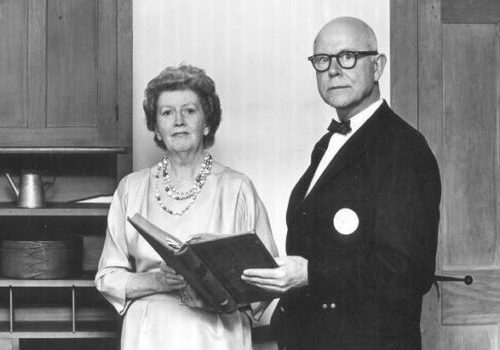
Faith and Edward Deming Andrews
In the early twentieth century, the role of Shaker design as an early form of vernacular American design was just beginning to be explored, and Force was eager to bring this important historic material to New York.
Dr. Edward Deming “Ted” (1894-1964) and Faith Andrews (1896-1990), renowned collectors, scholars, and advocates of Shaker material culture, crossed paths with Juliana Force in 1932 around the opening of their first large-scale Shaker exhibition at the Berkshire Museum in Pittsfield, Massachusetts. Starting in the 1920s, the Andrewses assembled a vast collection of Shaker material — spanning furniture, domestic objects, tools, garments, visionary artworks, and manuscripts — that they sought to study, preserve, and disseminate to a broad audience. The Berkshire Museum show, (facilitated by the visionary museum director Laura Bragg), provided entrée to the New York art world—an intelligent, successful, and well-connected group that would prove essential in the advancement of the Andrewses’ project.

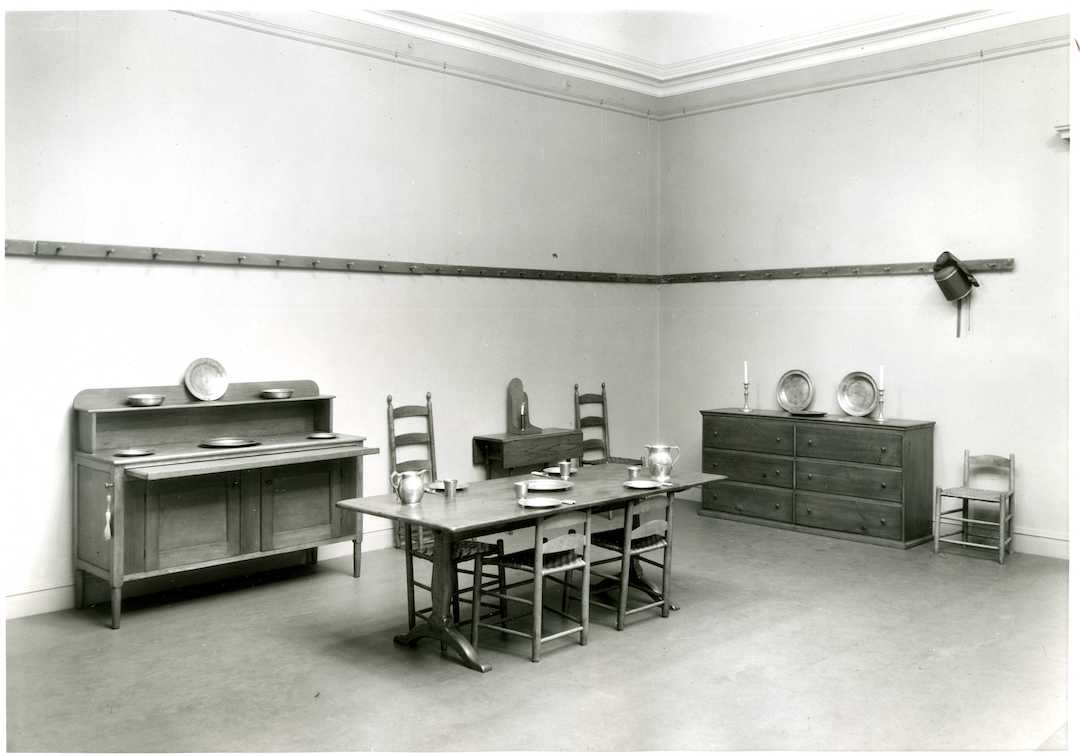
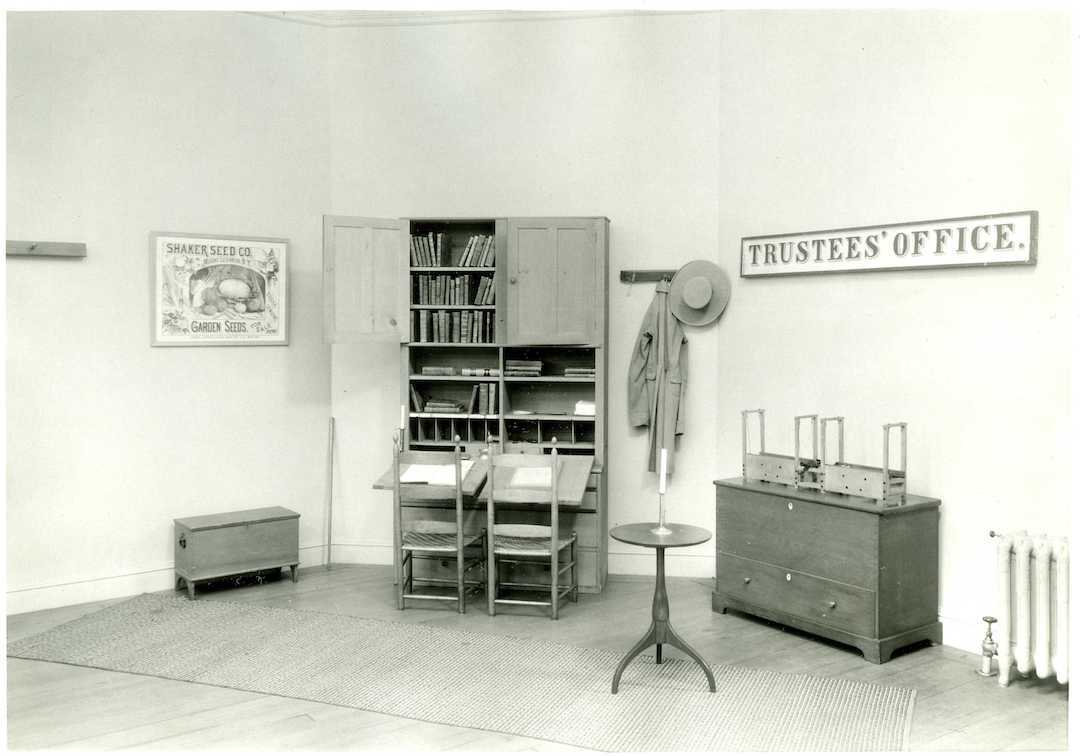

Community Industries of the Shakers, installed at the Berkshire Museum, 1932
Following the Berkshire Museum exhibit, Force traveled to Pittsfield to meet with the Andrewses and tour Hancock and Mount Lebanon Shaker villages. “Juliana Force was like Alice in Wonderland,” recalled Faith. “She saw what this was in a glance and knew it had to be shown as a special contribution to American culture.” In November 1932, they began planning an exhibition at the Whitney, Shaker Handcrafts, which opened November 12, 1935. Ted and Faith curated the show themselves and were permitted to arrange their collection in whatever way they desired with full institutional support from the Whitney. Faith recalled that this project was, “Christmas all the time… We were running it all.”

The Andrewses had been proselyting the merits of Shaker design and craft amongst New York’s culture brokers for several years; however, it was their debut at the Whitney and the support of Force that led to introductions with other luminaries such as Dorothea Canning Miller of the Museum of Modern Art, Holger Cahill of the Federal Art Project, Edith Gregor Halpert of Downtown Gallery, members of the Rockefeller and Vanderbilt families, and, of course, artist Charles Sheeler. Although her own finances were notoriously in disarray, Force contributed one thousand dollars to the publication of Shaker Furniture (1937), a book highlighting masterworks of Shaker design from the Andrews collection accompanied by the photographs of William F. Winter (1899-1939) staged “in situ” in Hancock’s brick dwelling.

“Mrs. Fierce” photographed for Vogue, 1940.
Nicknamed “Mrs. Fierce,” Force’s hallmarks were her impetuous generosity and extravagance — Shaker Hollow was just one of five houses between Europe and the US that she could not afford. Starting in 1932, the Andrewses and Force maintained a relationship rooted in their shared appreciation of Shaker material. The couple helped deepen Force’s understanding of Shaker history and design, advising on new acquisitions for her collection.
In the years following the exhibition at the Whitney, the relationship between Force and the Andrewses began to fall apart — in large part due to Force’s financial woes. In the spring of 1937, the Andrewses cataloged Force’s Shaker Hollow collection — 42 pieces of furniture in all, which was offered at a private sale in May. Gallerist Edith Halpert (1900-1970) brokered the sale to Blanchette Rockefeller (1909-1992) for $10,000, arranging for delivery of the furniture to the Rockefeller estate in Pocantico, New York. “No similar collection can ever be assembled as this — with few exceptions — represents the cream of the Shaker tradition,” wrote Halpert.
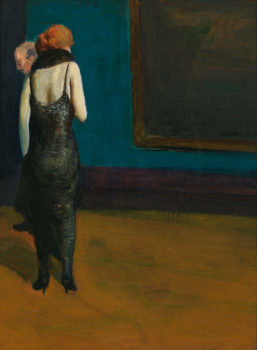
Guy Pène Du Bois, Juliana Force at the Whitney Studio Club, 1921. Whitney Museum of American Art
The Shaker Hollow sale was what provided funds for Shaker Furniture so, ultimately, it was a positive for the Andrewses. The incident that caused irreparable damage occurred later that fall and related to the Andrewses’ collection of Shaker visionary artworks, or “gift drawings.” Previously, the Andrewses asked to store the gift drawings in the vault of the Whitney Museum to keep them out of the fray while the Federal Art Project came to their home to document Shaker design. The artworks were securely housed at the museum until the Shaker Hollow sale in May, when they were returned to the Andrewses.
In January of 1938, a string of confusing correspondence called the ownership of this important collection into question. Essentially, Force’s secretary, Miss Freeman, wrote the Andrewses to inquire about the location of the gift drawings, given that the artworks “belonged to Mrs. Force” and had been unaccounted for since May. Faith kindly responded correcting the ownership of the artworks and confirming that they had been returned to their home in Richmond, Massachusetts.
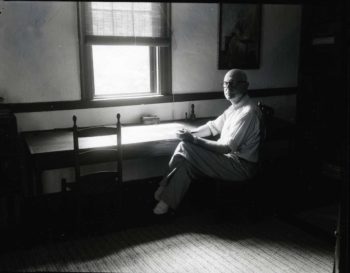
Edward Deming Andrews
On February 8, a reply came from Miss Freeman asserting that, in exchange for subsidizing the publication of Shaker Furniture, “Mrs. Force sincerely believes that these drawings are her only tangible result of her large investment.” Never planning on relinquishing the drawings, Ted writes a letter directly to Force inviting her to an in-person meeting to clarify the ownership of the artworks. In response, Force writes that Faith’s previous letter made their ownership clear, which signaled the end of the contentious salvo.*
Andrewses’ biographer Mario S. De Pillis interprets the exchange as Force attempting to strongarm the Andrewses into giving her the gift drawings by wielding an entirely unfounded claim. Regardless, the falling out effectively terminated the most important affiliation that the Andrewses had obtained. Force’s patronage helped raise the visibility of their work and canonize Shaker design within mainstream American cultural history in a significant way.